
Kubernetes & Container Security
- Home
- Services
- Penetration Testing Services
- Cloud
- Kubernetes & Container Security
Kubernetes is Powerful, but Unsecure by Default.
We secure your orchestration layer, harden your container runtime, and prevent Container Breakouts.
Modern infrastructure runs on containers, but managing them at scale introduces massive complexity. A single misconfigured YAML file or over-privileged pod can allow an attacker to take over your entire cluster. Our Kubernetes & Container Security services provide a rigorous, full-stack assessment of your containerized environment. We cover Docker image vulnerabilities in your registry to RBAC policies controlling your production clusters (EKS, AKS, GKE, or OpenShift), and more.


Get a Custom Quote!







See What Our Clients Are Saying
Our clients consistently share that our collaborative partnership and transparent communication help them build stronger security programs.
- List Item #1
- List Item #1
- List Item #1
- List Item #1
- List Item #1
HAVEN6 has become our go-to partner for serious cloud security and penetration testing.
They’ve helped our clients harden AWS and Azure configurations, identify risky misconfigurations, and validate issues through focused penetration testing on networks, web apps, and APIs.

Ramin Lamei
TechCompass
- List Item #1
- List Item #1
- List Item #1
- List Item #1
- List Item #1
We have enjoyed working with HAVEN6. They were able to help us on some long-term agreements for pen testing.
Their personnel and management are easy to work with.
We look forward to our next project with them!

Joshua Weathers
Sugpiat Defense
What Requires Kubernetes & Container Security?
Deploying to production without a specialized K8s assessment is risky. You need this service if:
Managed K8s
While cloud providers manage the Control Plane, you are responsible for Worker Nodes, Pod Security Standards, and Network Policies.
Compliance (PCI/SOC2)
Auditors are increasingly demanding proof of “Container Isolation” and distinct segmentation between data environments.
High-Velocity Deployments
Developers deploy code daily using Helm or Kustomize. You need to ensure “Shift Left” security is catching misconfigurations.
Multi-Tenancy
You run multiple clients or teams on the same cluster and need to guarantee that Team A cannot access Team B’s namespaces.
Supply Chain Risks
You rely on public Docker Hub images for speed and convenience but need to verify they don’t contain backdoors or critical CVEs.
Types of Environments We Secure
We are experts in both vanilla Kubernetes and more complex Cloud-Managed distributions.
| Test Type | Description |
| Managed Cloud Clusters (EKS, AKS, GKE) | Focusing on Cloud IAM integration, VPC CNI plugins, and cloud-specific misconfigurations. |
| Self-Managed / On-Premise (Kubeadm, Rancher, OpenShift) | Deep testing of the Control Plane, Master Nodes, and etcd storage security. |
| Serverless Containers (AWS Fargate / Google Cloud Run) | Assessing runtime security and permissions in environments where you don’t manage the underlying nodes. |
| Infrastructure as Code (IaC) Review | Scanning your Terraform, Helm Charts, and Dockerfiles to fix security issues before they are deployed. |
What Our Container Security Service Includes
We go deep into the YAML. Our assessment covers the following areas:
Cluster Configuration
We audit the API Server, etcd encryption, and Kubelet configurations against the CIS Kubernetes Benchmark.
RBAC Analysis
We hunt for over-privileged Service Accounts. Can a pod query the API server to list secrets or delete?
Container Breakout
We attempt to escape the container to gain root access on the host Node (e.g., via privileged flags).
Network Segmentation
We test “East-West” traffic. If we compromise the frontend web server, can we talk directly to the backend database pod?
Image Vuln. Scanning
We scan your container registry (ECR, ACR, GCR) for known vulnerabilities (CVEs) and malware in base images.
K8s Security Deliverables for Cloud Clarity
We provide clear and actionable intelligence: why a vulnerability matters, how an attacker would actually exploit it, and the fixes that reduce risk.
Executive Summary
A high-level risk scorecard for the Management, Executives, C-Suite, and Boards, detailing overall cloud posture and business impact.
Detailed Technical Findings
A step-by-step guide on how we exploited the environment, including attack path visualization, screenshots, and proof-of-concept evidence.
YAML Patches
We provide you with the exact Helm values, NetworkPolicies, or OPA Gatekeeper constraints needed to fix the findings from the report.
Compliance Mapping
We map every finding to controls in SOC 2, ISO 27001, PCI-DSS, or other compliance frameworks, so you can use the report for your audit.
Kubernetes Security Certifications
Our team holds industry-recognized certifications that reflect hands-on expertise across offensive security, cloud, incident response, and compliance.
Offensive Security Certified Professional (OSCP)
Certified Information Systems Security Professional (CISSP)
GIAC Penetration Tester (GPEN)
GIAC Cloud Penetration Tester (GCPN)
GIAC Cloud Penetration Tester (GCPN)
CompTIA Security+, Network+, A+, Pentest+
GIAC Certified Incident Handler (GCIH)
AWS Certified Cloud Practitioner (CCP)
Microsoft AZ-900, SC-900, AZ-500, AZ-305, SC-100
Certified Cloud Security Professional (CCSP)
Certified Ethical Hacker (CEH)
Burp Suite Certified Practitioner (Apprentice)
Google Professional Cloud Security Engineer
Web App Penetration Tester (eWPT)
Systems Security Certified Practitioner (SSCP)
Palo Alto PSE Certifications
Why Clients Trust Us for K8s Security
We protect your lifecycle from CI/CD pipelines to runtime defense, delivering the exact YAML patches and kubectl commands needed to remediate vulnerabilities.
Full Lifecycle Approach

We don’t just look at the running cluster. We look at the build pipeline (CI/CD) to stop vulnerabilities.
Runtime Defense

We help you implement runtime security tools (like Falco or Tetragon) to detect active attacks.
Remediation as Code
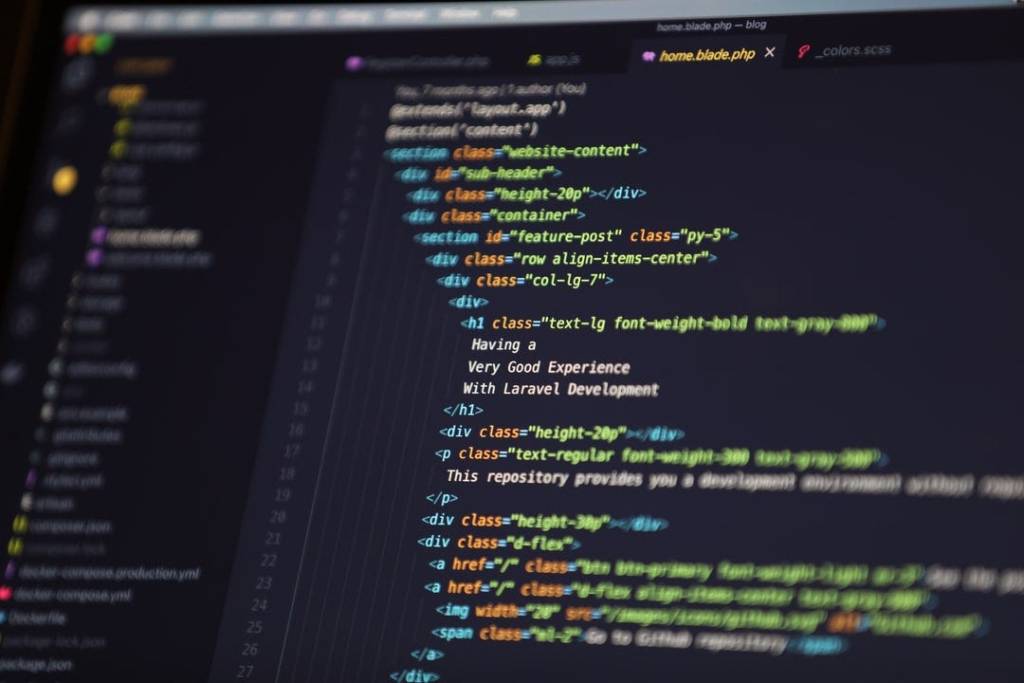
We provide the exact YAML patches or kubectl commands needed to fix the findings.
Ship Fast; Ship Secure.
Get a comprehensive Kubernetes security assessment.
K8s & Container Security: FAQs
Learn more information about the most frequently asked questions
What is Kubernetes & Container Security?
Kubernetes & Container Security is the practice of protecting containerized applications throughout their lifecycle—Build, Deploy, and Run.
Unlike traditional server security, container security requires a layered approach. It involves securing the Supply Chain (ensuring base images are clean), the Orchestration Layer (locking down the Kubernetes API and RBAC), and the Runtime Environment (detecting if a compromised container tries to attack other containers or the host node). Our service acts as a “Red Team” for your clusters, attempting to exploit these layers just like a real-world attacker.
Can you test our cluster without crashing it?
Yes. We focus on configuration reviews and “safe” exploitation. While we verify if we can break out of a container or delete a resource, we stop short of destructive actions that would impact production availability.
Do you check for Image Vulnerabilities?
Yes. We perform Software Composition Analysis (SCA) on your running images to identify outdated libraries (CVEs) and hardcoded secrets.
Difference between EKS Security and Standard K8s Security?
In EKS (AWS), the Control Plane is managed by Amazon. We cannot pentest the Master Nodes. Instead, we focus heavily on IAM Roles for Service Accounts (IRSA), ensuring your pods don’t have excessive permissions to talk to S3 or DynamoDB.
How do you handle remediation? Do you fix the issues for us?
Yes, if requested. We offer “Assisted Remediation” services where our engineers work alongside your DevOps team to apply policies. However, if you prefer to handle fixes internally, we provide “Remediation as Code.” Our reports include the exact Helm values or YAML configurations your team needs to copy-paste to resolve the vulnerabilities.
Will this test satisfy SOC 2 Type II and ISO 27001 auditors?
Absolutely. Our reports are specifically designed to meet the “External Penetration Testing” requirements for SOC 2 (CC 4.1 and CC 7.1), ISO 27001, HIPAA, and PCI-DSS. We provide an auditor-friendly executive summary and a technical remediation plan.
Can this help us pass PCI DSS?
Absolutely. PCI requires strict segmentation. In Kubernetes, this is achieved via Network Policies and Namespaces. We test these boundaries to prove to your auditor that the Cardholder Data Environment (CDE) is isolated.
Do you look at our Helm Charts?
Yes. We review your Helm Charts and Kustomize files. Fixing a misconfiguration in the Helm Chart is far more effective than fixing it in the running cluster, as it ensures future deployments are secure.
Do you integrate with our CI/CD pipeline?
Yes. We can help you configure tools to scan images and manifests automatically in GitHub Actions, GitLab CI, or Jenkins, ensuring “Continuous Security.”