
Secure Your Innovation.
Get GCP Pentesting.
Identify critical IAM misconfigurations, exposed Storage Buckets, and GKE vulnerabilities in your Google Cloud.
Google Cloud Platform (GCP) offers powerful tools for scalability and AI, but its complex hierarchy of Organizations, Folders, and Projects can hide dangerous security gaps. A simple misconfiguration in a Service Account or Firewall Rule can leave your data exposed to the public internet. Our GCP Penetration Testing services dig deep into your configuration to find the logic flaws and privilege escalation paths that automated scanners miss.






Get a Custom Quote!









See What Our Clients Are Saying
Our clients consistently share that our collaborative partnership and transparent communication help them build stronger security programs.
- List Item #1
- List Item #1
- List Item #1
- List Item #1
- List Item #1
HAVEN6 has become our go-to partner for serious cloud security and penetration testing.
They’ve helped our clients harden AWS and Azure configurations, identify risky misconfigurations, and validate issues through focused penetration testing on networks, web apps, and APIs.

Ramin Lamei
TechCompass
- List Item #1
- List Item #1
- List Item #1
- List Item #1
- List Item #1
We have enjoyed working with HAVEN6. They were able to help us on some long-term agreements for pen testing.
Their personnel and management are easy to work with.
We look forward to our next project with them!

Joshua Weathers
Sugpiat Defense
What Requires GCP Penetration Testing?
You need a manual deep-dive into your cloud environment if you are facing:
Kubernetes Adoption (GKE)
You are reliant on Google Kubernetes Engine and need to ensure clusters are hardened against container breakouts.
Compliance Mandates
You need independent validation of your cloud controls for SOC 2 Type II, ISO 27001, PCI-DSS, or HIPAA.
Big Data Security
You use BigQuery or Cloud SQL to process massive datasets and need to control & prevent unauthorized exports.
Multi-Cloud Complexity
You operate in a hybrid cloud environment and need to ensure your VPN tunnels and Interconnects are secure.
High Velocity DevSecOps
Your team uses Cloud Build and Cloud Run to deploy daily, and need assurance that new code isn’t vulnerable.
Types of GCP Pentesting We Perform
We tailor the assessment to your specific architecture and access levels.
| Test Type | Description |
| GCP Configuration Review (White Box) | We request “Viewer” and “Security Reviewer” access to your Organization or Project. The most effective way to secure the control plane. |
| GKE Penetration Testing | We attempt to compromise a pod and leverage that access to attack the underlying node or the wider GCP project. |
| Black Box / External Testing | We attack your public-facing assets (Load Balancers, App Engines) from the internet to test your perimeter defenses (Cloud Armor). |
| Hybrid / Anthos Testing | Testing the security of hybrid setups managing workloads across on-prem and cloud environments. |
What Our GCP Pentesting Service Includes
We examine the entire GCP resource hierarchy.
IAM & Account Analysis
We hunt for “Privilege Escalation” risks, such as users with permissions who can impersonate highly privileged accounts.
Kubernetes Review
We assess your clusters for insecure Pod Security Standards, exposed Kubelet APIs, and lack of Workload Identity implementation.
Storage & BigQuery
We scan for publicly accessible Cloud Storage buckets and BigQuery datasets lacking proper access controls, to harden them.
Network Security (VPC)
We review VPC Service Controls, Firewall Rules, and Private Service Connect setups to ensure proper segmentation.
Serverless Security
We test Cloud Functions and Cloud Run services for unauthenticated invocation and insecure environment variables.
GCP Pentesting Deliverables for Clarity in the Cloud
We provide clear and actionable intelligence: why a vulnerability matters, how an attacker would actually exploit it, and the fixes that reduce risk.
Executive Summary
A high-level risk scorecard for the Management, Executives, C-Suite, and Boards, detailing overall cloud posture and business impact.
Detailed Technical Findings
A step-by-step guide on how we exploited the environment, including attack path visualization, screenshots, and proof-of-concept evidence.
Remediation Code
We provide the gcloud CLI commands and Terraform snippets to quickly fix any and all cloud misconfigurations that were found during testing.
GKE Hardening Guide
We make recommendations for locking down your Kubernetes clusters, such as restricting API server access, implementing strict PSS, and more.
GCP Penetration Testing Certifications
Our team holds industry-recognized certifications that reflect hands-on expertise across offensive security, cloud, incident response, and compliance.
Offensive Security Certified Professional (OSCP)
Certified Information Systems Security Professional (CISSP)
GIAC Penetration Tester (GPEN)
GIAC Cloud Penetration Tester (GCPN)
GIAC Cloud Penetration Tester (GCPN)
CompTIA Security+, Network+, A+, Pentest+
GIAC Certified Incident Handler (GCIH)
AWS Certified Cloud Practitioner (CCP)
Microsoft AZ-900, SC-900, AZ-500, AZ-305, SC-100
Certified Cloud Security Professional (CCSP)
Certified Ethical Hacker (CEH)
Burp Suite Certified Practitioner (Apprentice)
Google Professional Cloud Security Engineer
Web App Penetration Tester (eWPT)
Systems Security Certified Practitioner (SSCP)
Palo Alto PSE Certifications
Why Clients Choose Us for GCP Pentesting
We leverage deep GKE expertise and custom GCP tooling to uncover risks, providing you with the exact gcloud commands and Terraform code to fix them.
GKE Specialists

We don’t just scan the cloud; we are experts in container security and Kubernetes orchestration.
Custom GCP Tooling
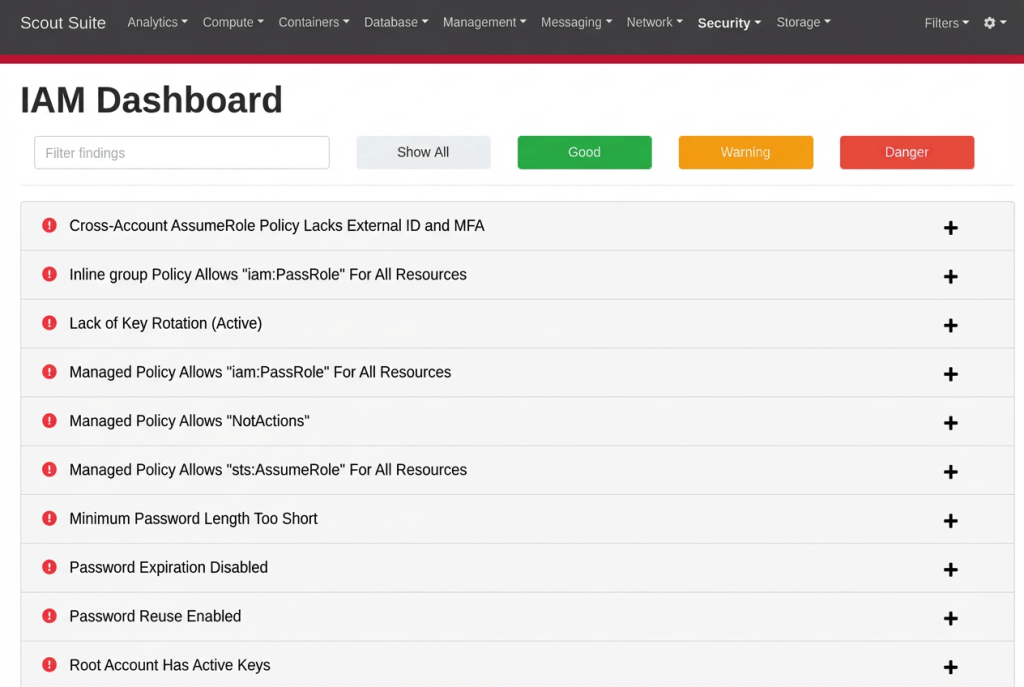
We utilize tools specifically built for GCP audits (like ScoutSuite and proprietary scripts) to find risks.
Actionable Remediation

We provide the gcloud commands and Terraform code to fix the issues we find.
Secure Your Google Cloud.
Get a comprehensive assessment of your GKE and GCP infrastructure today.
GCP Pen Testing: FAQs
Learn more information about the most frequently asked questions
What is GCP Penetration Testing?
GCP Penetration Testing is a comprehensive security evaluation of your Google Cloud Platform infrastructure. It focuses on identifying risks within the “Customer” side of the Shared Responsibility Model.
Unlike AWS or Azure, GCP manages identity and access through a unique system of Service Accounts and IAM Bindings. Our assessment focuses heavily on these identity vectors. We simulate an attacker attempting to exploit permissions, impersonate Service Accounts, escape Kubernetes containers, and access sensitive data stored in BigQuery or Cloud Storage.
Do we need Google's permission to pentest?
No. Google does not require prior notification for penetration testing of your own projects. However, you must abide by the Google Cloud Platform Acceptable Use Policy and not target other customers or Google’s own infrastructure services.
Can you test our GKE clusters?
Yes. GKE is a core part of our GCP testing methodology. We review both the cluster configuration (Control Plane security) and the runtime security (Pod security, Network Policies, and Container Breakouts).
How do you handle remediation? Do you fix the issues for us?
Yes, if requested. We offer remediation services where our engineers work alongside your team to implement the necessary fixes directly within your environment. However, if you prefer to handle the fixes internally—or if strict audit independence is required (such as SOC 2 Type II)—we provide remediation as code. Our reports include the exact gcloud CLI commands or Terraform code snippets your team needs to copy-paste to resolve the vulnerabilities.
Will this test satisfy SOC 2 Type II and ISO 27001 auditors?
Absolutely. Our reports are specifically designed to meet the “External Penetration Testing” requirements for SOC 2 (CC 4.1 and CC 7.1), ISO 27001, HIPAA, and PCI-DSS. We provide an auditor-friendly executive summary and a technical remediation plan.
What is the biggest risk in GCP?
Service Account Keys. Unlike AWS which uses Roles mostly, GCP relies heavily on Service Account JSON keys. These keys do not expire by default and are often accidentally committed to GitHub. We scan specifically for this risk.
Do you check for Shadow IT?
Yes. We scan your Organization level to find abandoned projects that may have been created by developers outside of your standard governance process.
What is the biggest risk in GCP?
Service Account Keys. Unlike AWS which uses Roles mostly, GCP relies heavily on Service Account JSON keys. These keys do not expire by default and are often accidentally committed to GitHub. We scan specifically for this risk.
Will this slow down our production environment?
No. Our configuration reviews are API-based and passive. Active exploitation is performed carefully and coordinated with your team to ensure zero downtime.